

How to Register a Business in South Africa!
Starting a business is an exciting venture, but before you can officially begin operations, it’s important to register your company. Registering a business gives it legal recognition, which is essential for protecting your personal assets, building credibility with customers, and accessing potential funding opportunities. Whether you are operating as a sole proprietor, a partnership, or a corporation, formal registration provides a legal framework that helps you comply with regulations, file taxes, and engage in contracts under the company’s name.
In this guide, we’ll walk you through the key steps to successfully register your business, from preparing the right documentation and choosing a suitable business structure to understanding regulatory requirements and filing the necessary paperwork.
1. Choose the business structure
When registering a business in South Africa, selecting the appropriate structure is crucial for determining liability, tax obligations, and administrative requirements. Here’s a breakdown of the most common structures, focusing on those that can be registered with the Companies and Intellectual Property Commission (CIPC) and BizPortal.
• Private Company (Pty Ltd): This is the most popular choice for small to medium-sized businesses in South Africa. A private company is a separate legal entity, meaning the company’s liabilities are distinct from those of its shareholders. Shareholders are only liable for their investment in the company, protecting personal assets. You can register a Private Company through the CIPC or BizPortal, making it a straightforward option for entrepreneurs who want liability protection while maintaining flexibility in management.
• Non-Profit Company (NPC): Non-profit companies are designed to further a public benefit cause, and any profits must be reinvested in the business’s activities. Like private companies, NPCs are separate legal entities and can be registered via CIPC or BizPortal. These are typically used for charitable organizations, public benefit organizations, and social enterprises.
For the following structures, CIPC and BizPortal do not handle registrations, but they are still valid business options in South Africa:
• Sole Proprietorship: This structure is not registered with CIPC. It is the simplest form of business, where the owner and the business are legally the same. The owner is personally liable for all debts and liabilities of the business. It’s quick and easy to start but carries personal financial risk.
• Partnership: A partnership is also not registered with CIPC. It involves two or more individuals who agree to run a business together and share profits and losses. Each partner is personally liable for the business’s debts, and the partnership is formed through a private agreement between the parties.
• Public Company (Ltd): A public company is ideal for large businesses that plan to raise capital by offering shares to the public. Unlike private companies, public companies are subject to stricter regulatory requirements and must comply with specific rules outlined in the Companies Act. Importantly, public companies cannot be registered via BizPortal or online on the CIPC website. Instead, they must be registered by submitting an application via email to the CIPC. Public companies have more extensive reporting obligations and must regularly provide financial statements to their shareholders. For a step-by-step guide on how to register a public company, you can refer to this CIPC guide on registering a public company.
• Co-operative: Co-operatives are member-owned businesses typically found in agriculture and community-based enterprises. They are not registered through CIPC or BizPortal but instead have their own registration process through specific departments focused on co-operatives.
In summary If you’re planning to start a business in South Africa and need to register through the CIPC or BizPortal, your options are either a Private Company (Pty Ltd) or a Non-Profit Company (NPC). For other business structures like Sole Proprietorships, Partnerships, and Co-operatives, alternative registration or setup processes apply, and they do not involve the CIPC registration system.
2. What documentation will you need?
Here are the basic documents that will be required to register your company:
a. A South African ID
b. A debit or credit card to make payment
c. A list of up to four proposed names for your company
d. All other directors identity documents/ cards and marriage certificates with questions such as:
i. Date of issue of the identity documents
ii. Marriage date, per home affairs
iii. Spouses ID number
3. Lets finally talk about how exactly to get your company registered
STEP 1 : Go to: https://www.bizportal.gov.za/login.aspx
STEP 2 : Login to BizPortal – if you don’t already have an account, create one
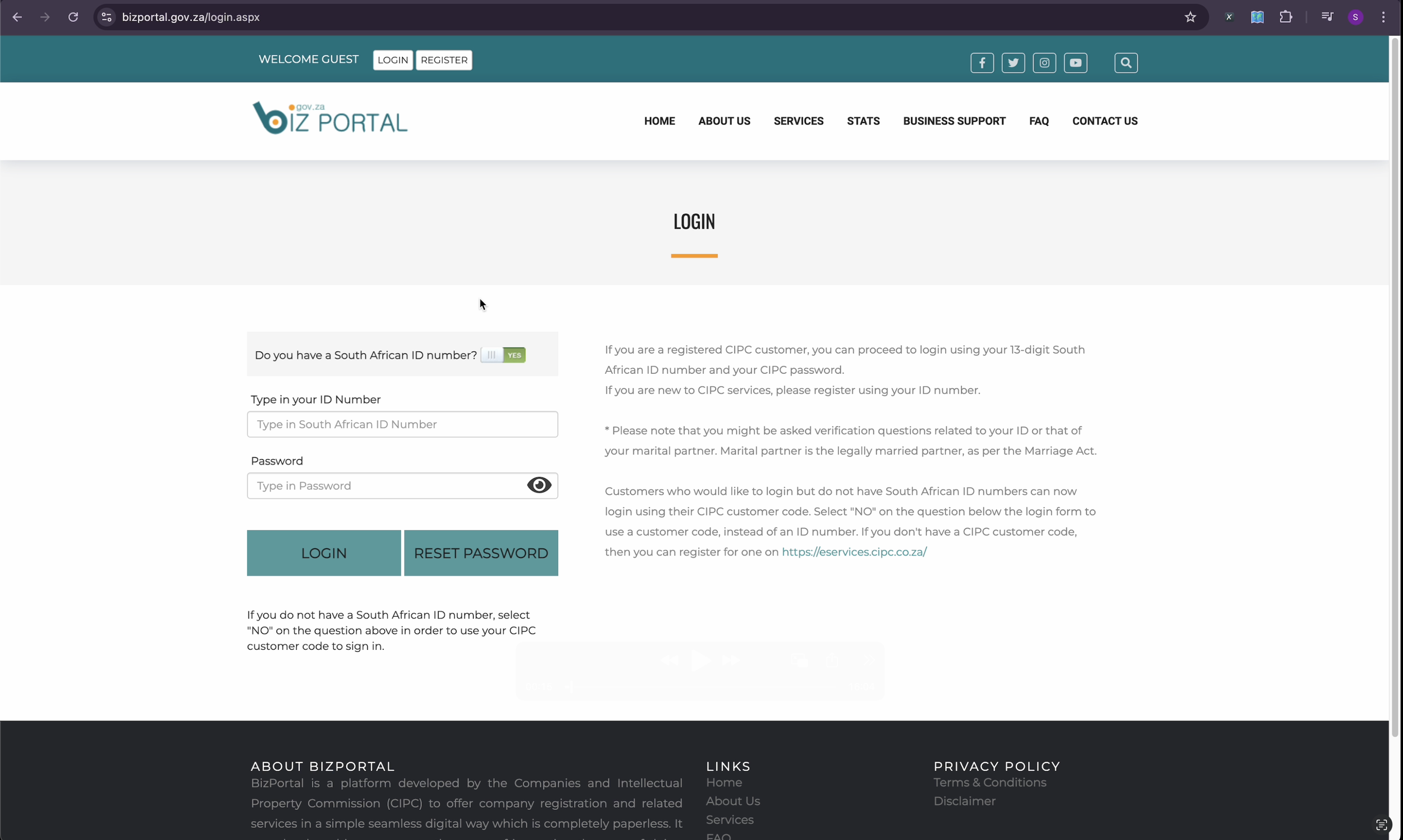
STEP 3 : Click register a new Company
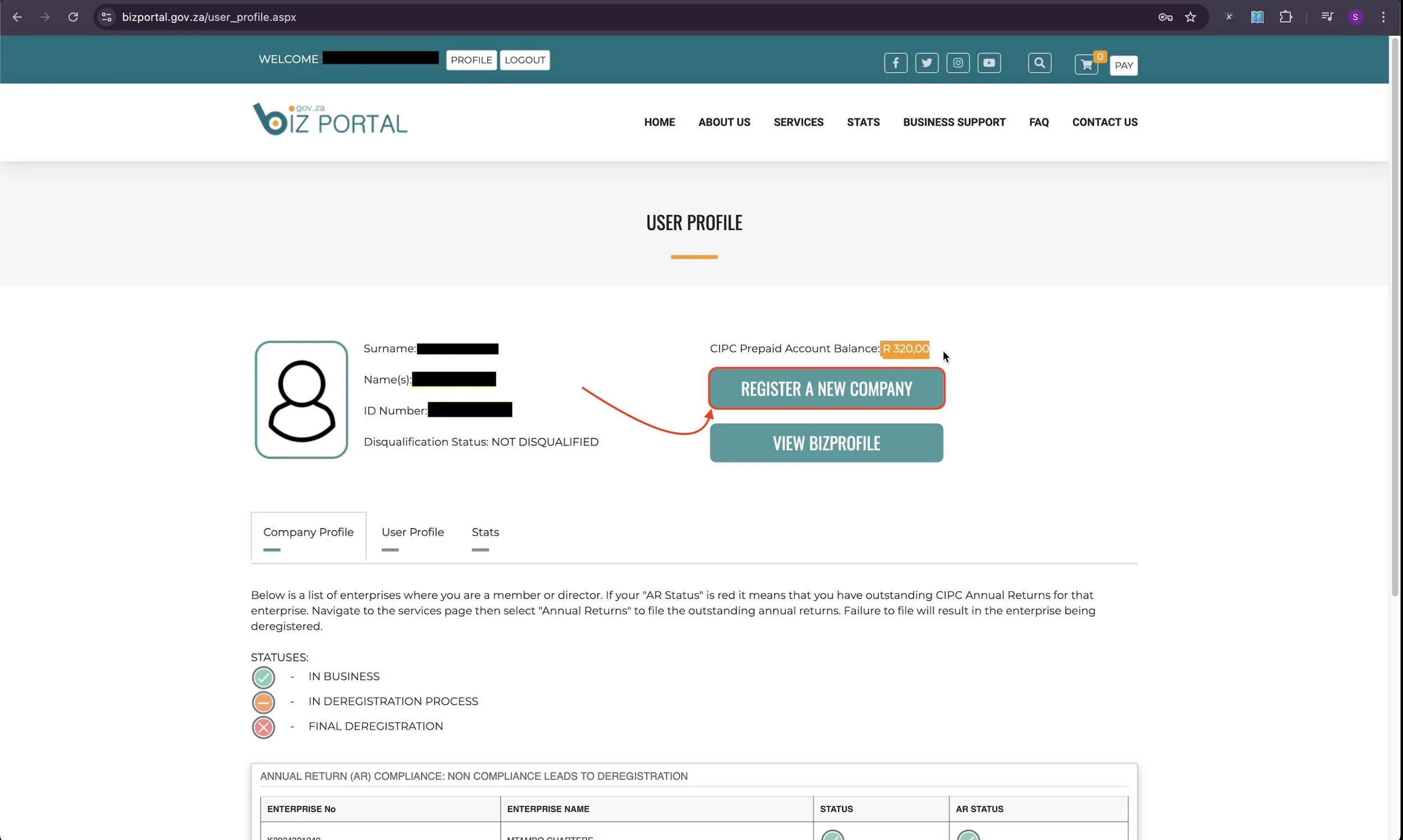
STEP 4 : Hit the “New Registration” button
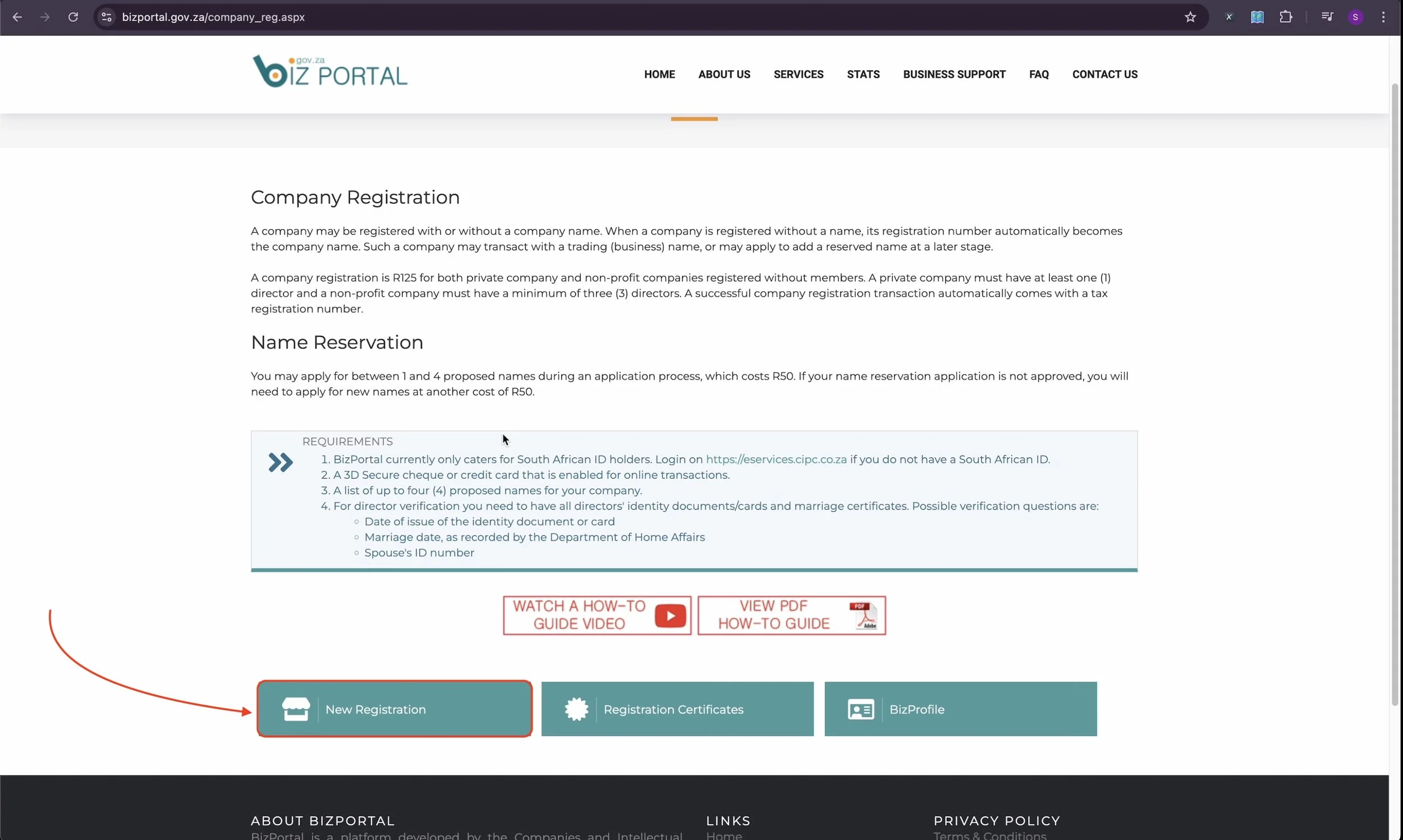
STEP 5: Accept the CIPC terms and conditions
STEP 6 : Accept the compensation fund terms and conditions
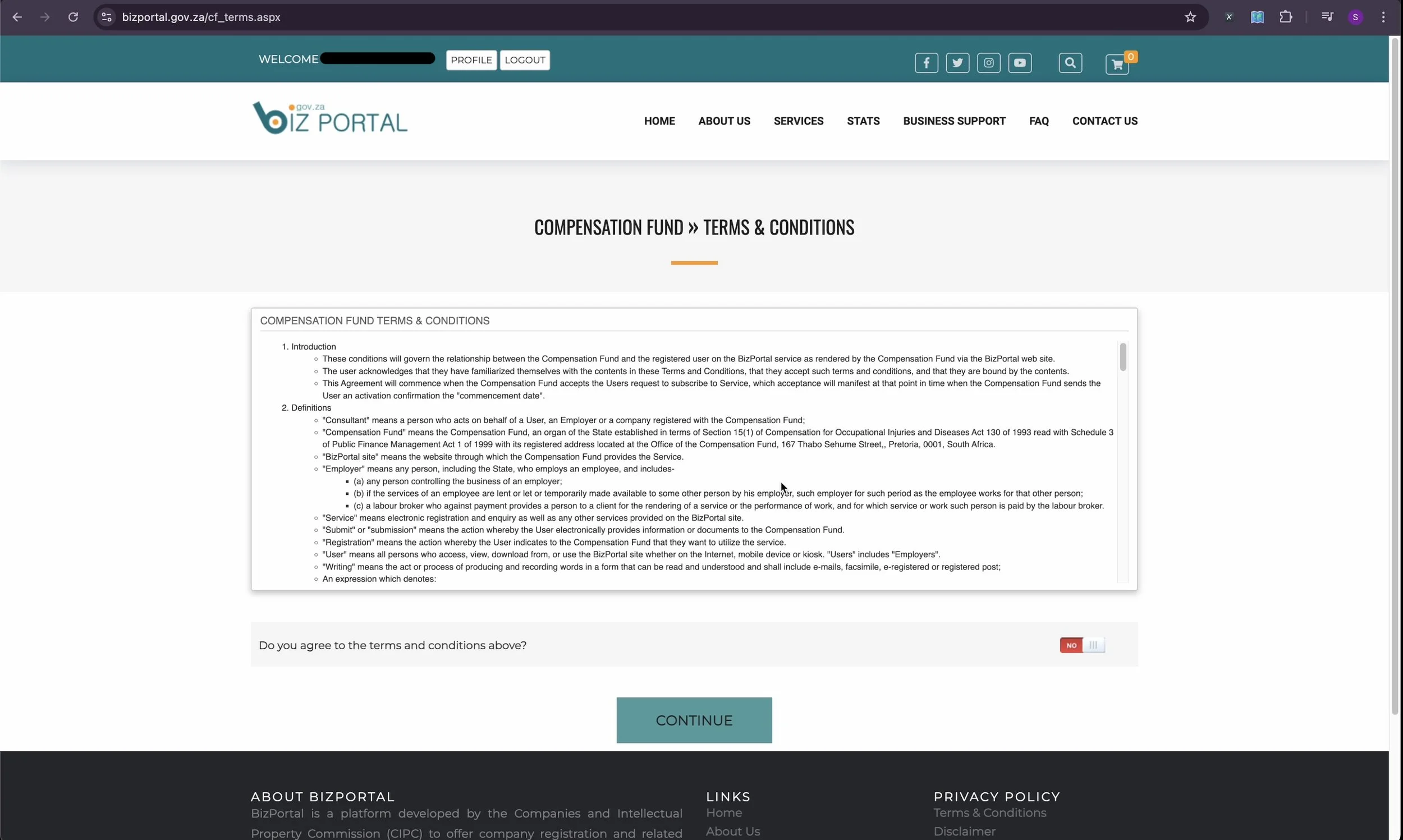
STEP 7 : Accept UIF terms and conditions
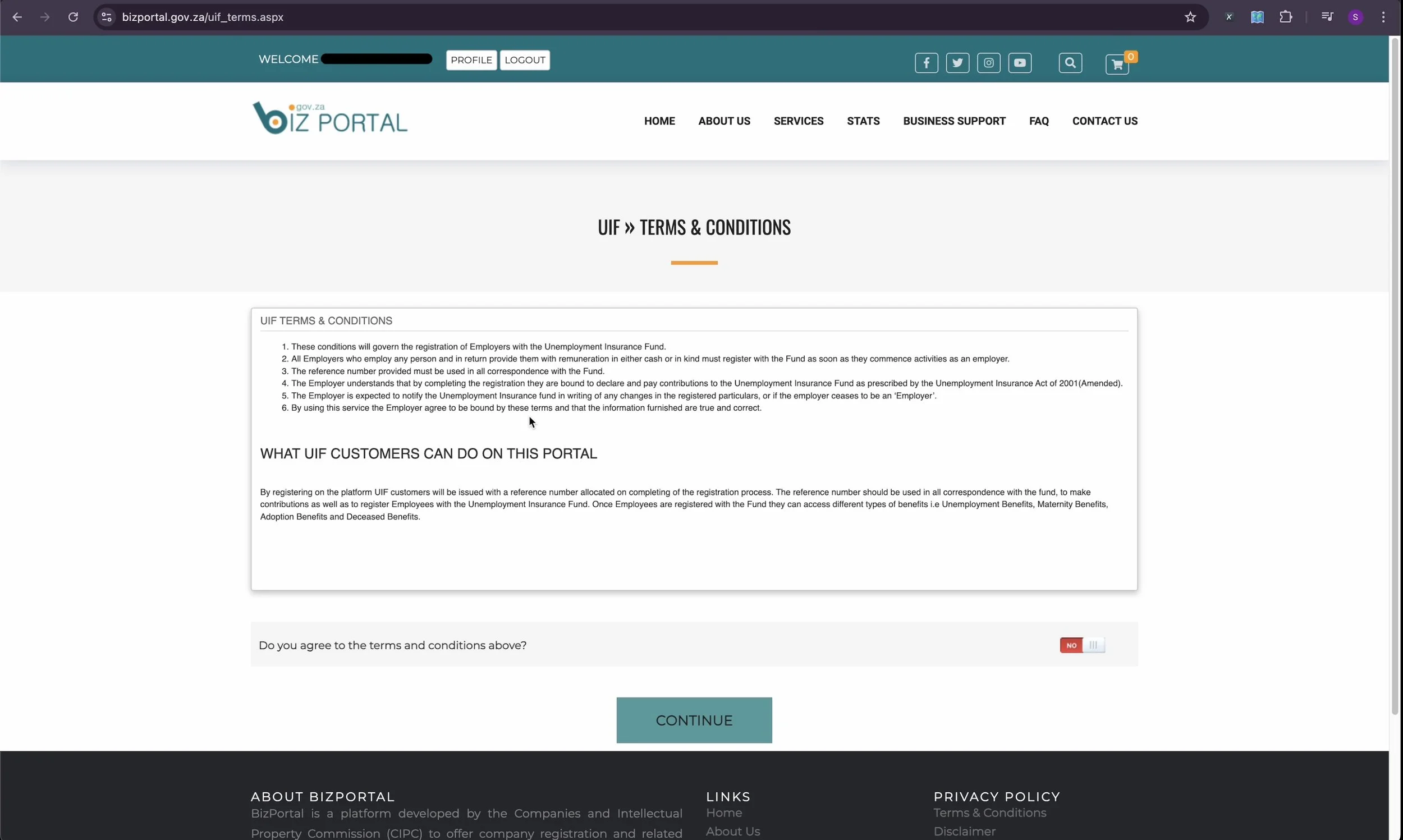
STEP 8 : Select a company type then hit continue
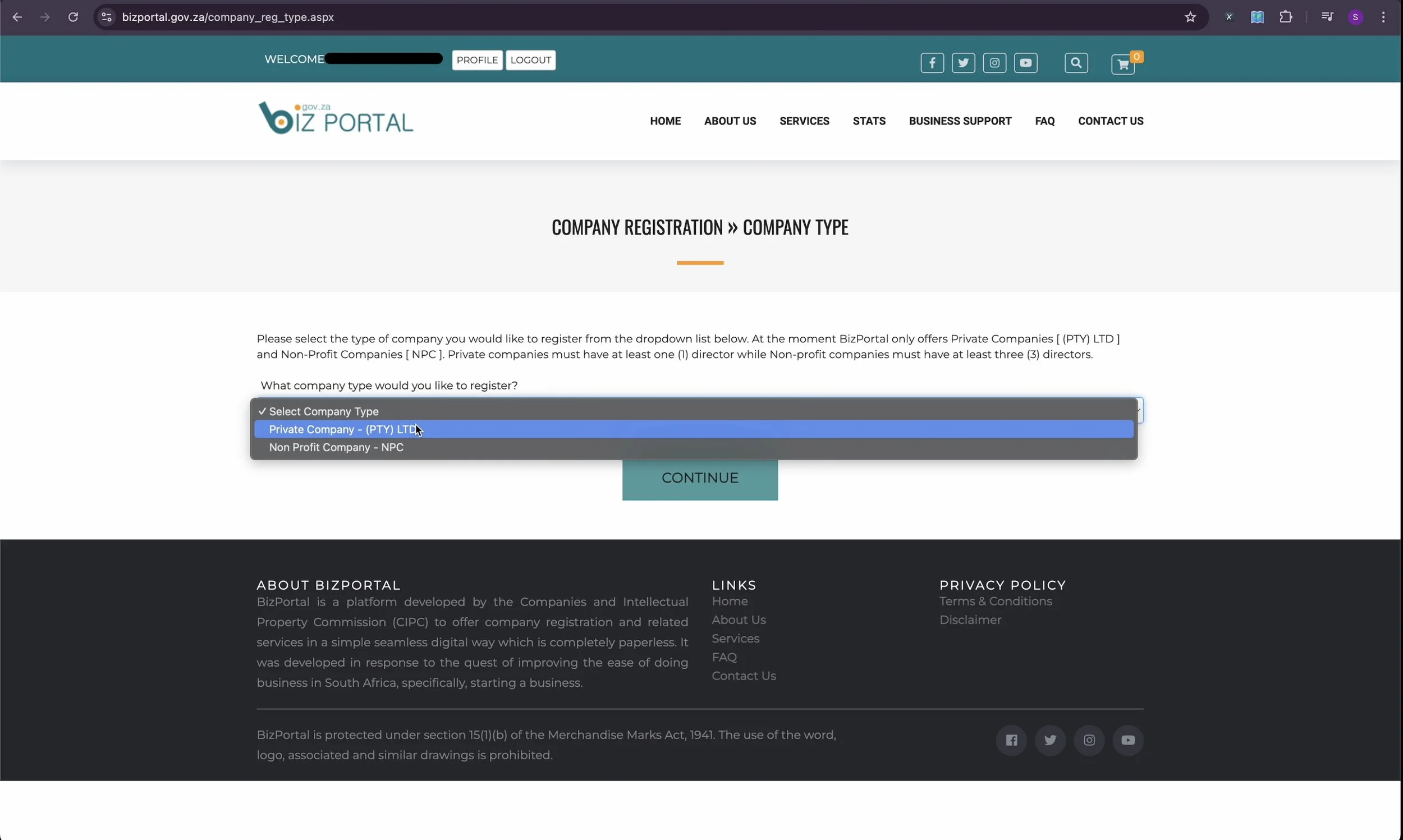
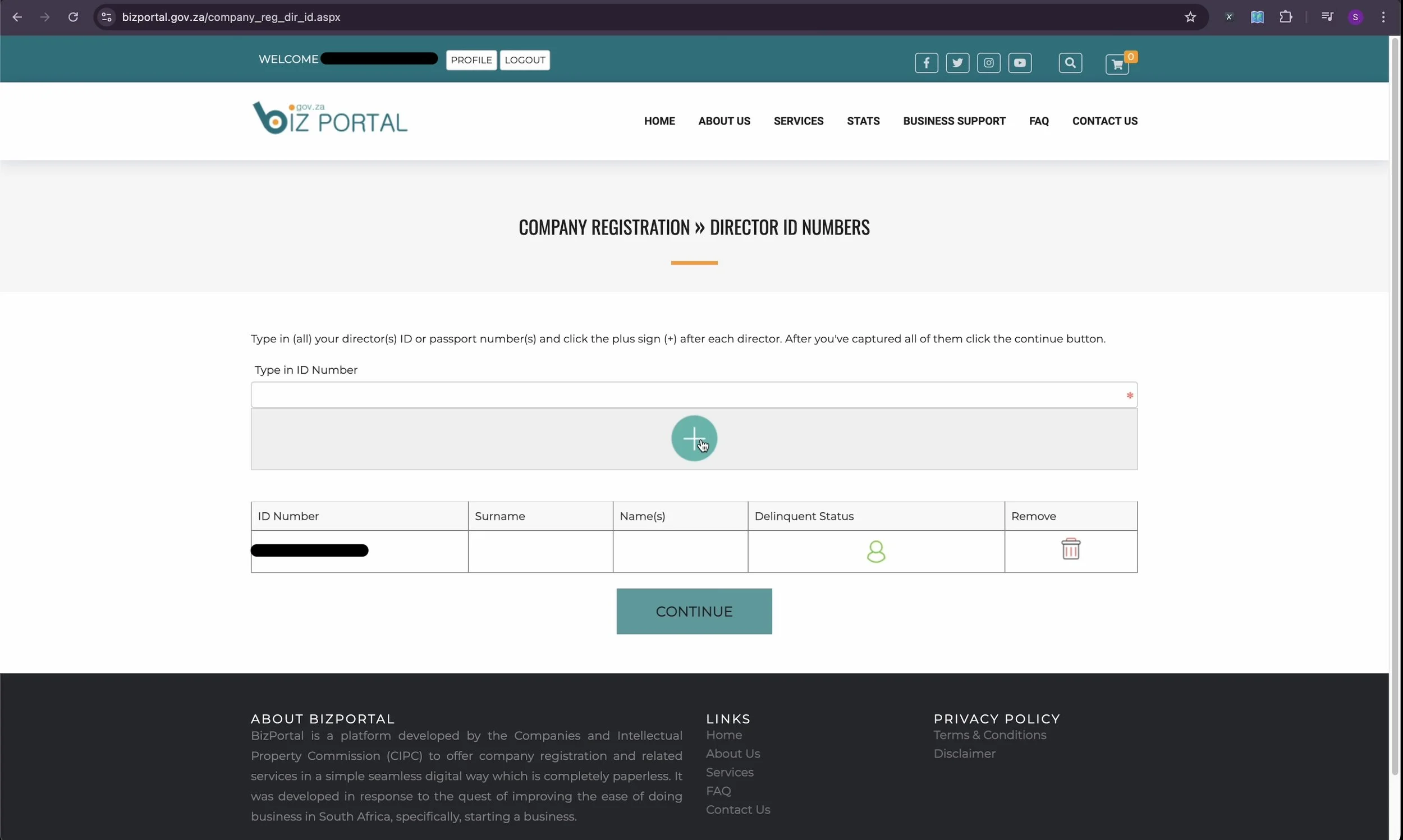
STEP 9 : Enter the directors ID numbers, after each one hit the plus to include it
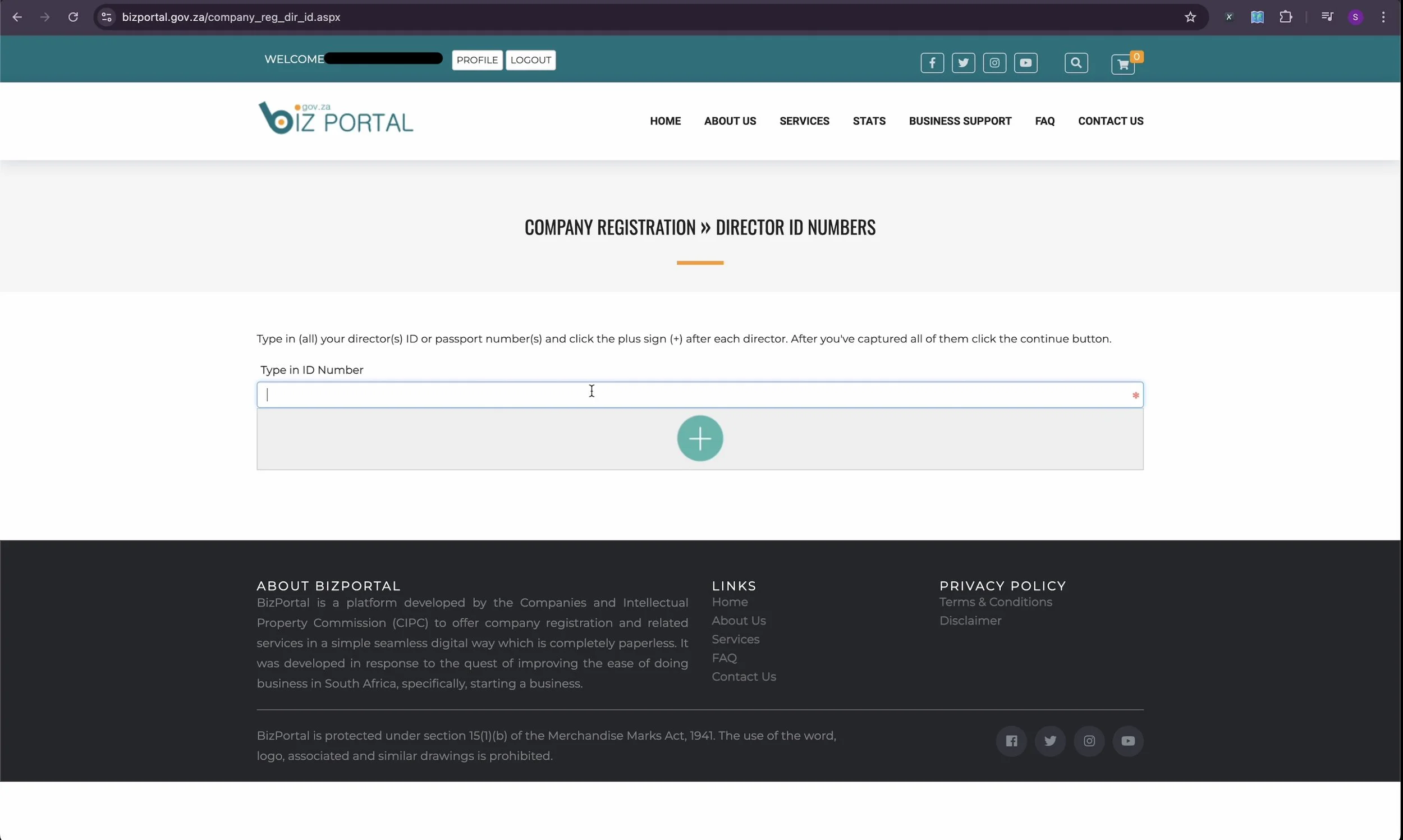
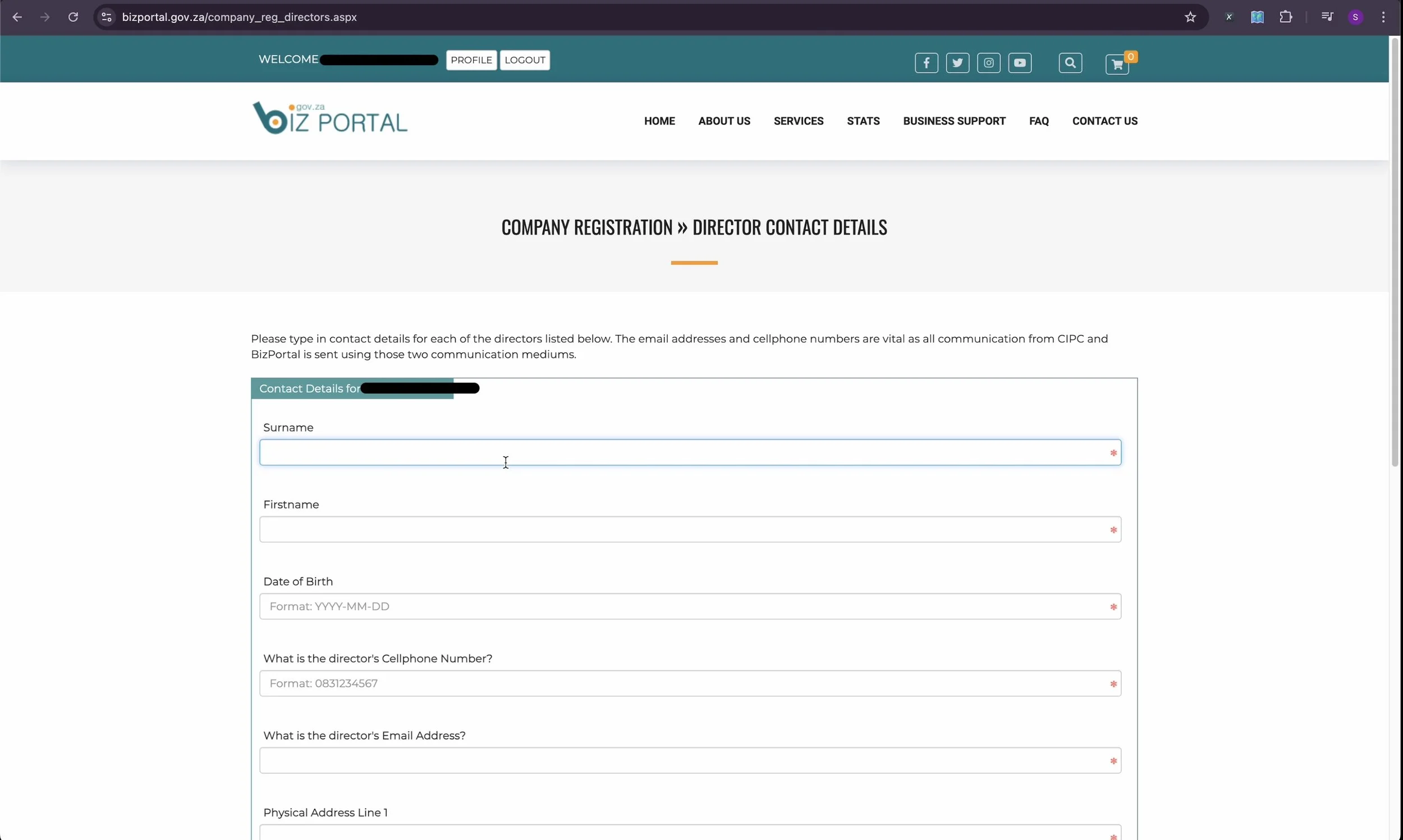
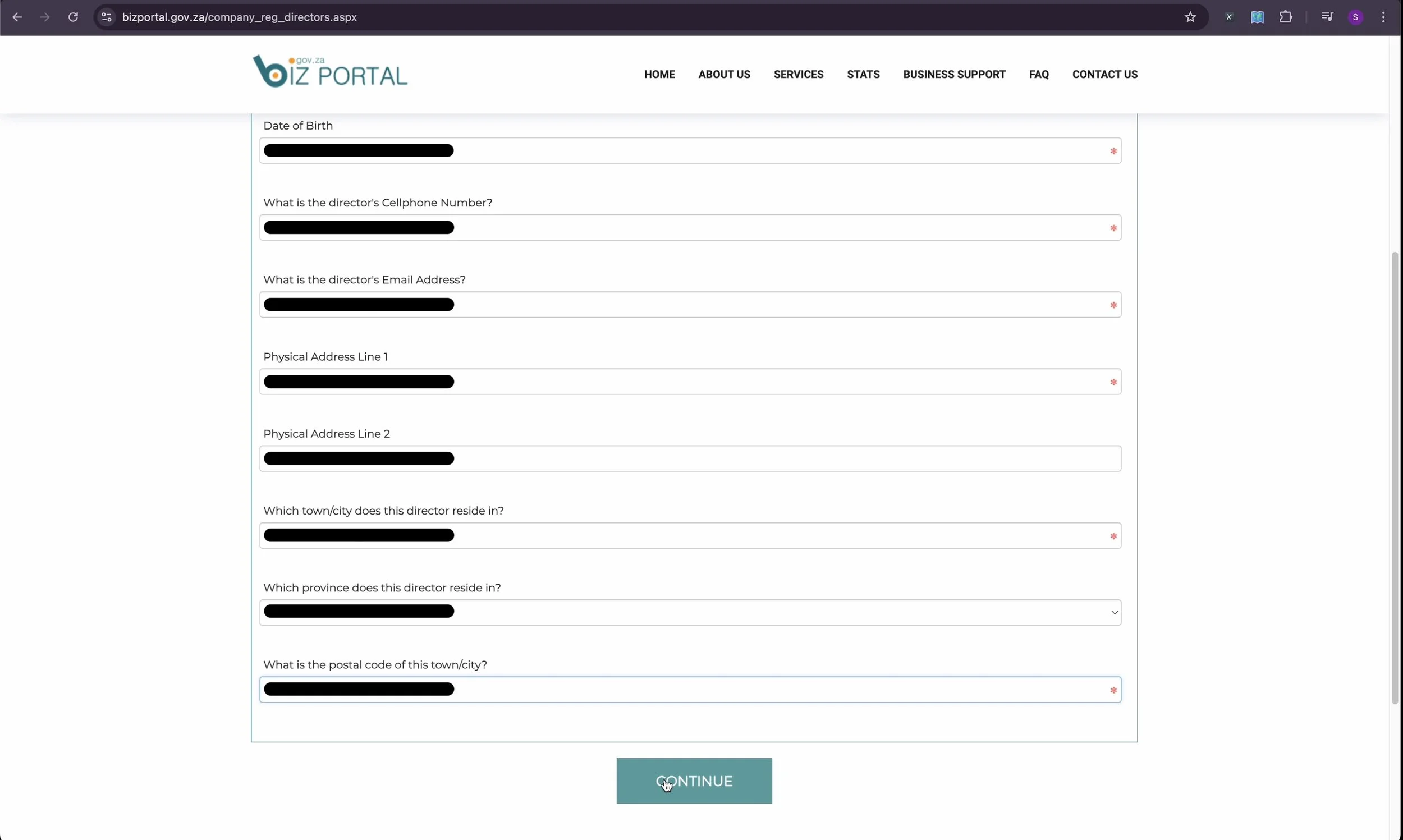
STEP 10 : For each director fill in their details as required and hit continue
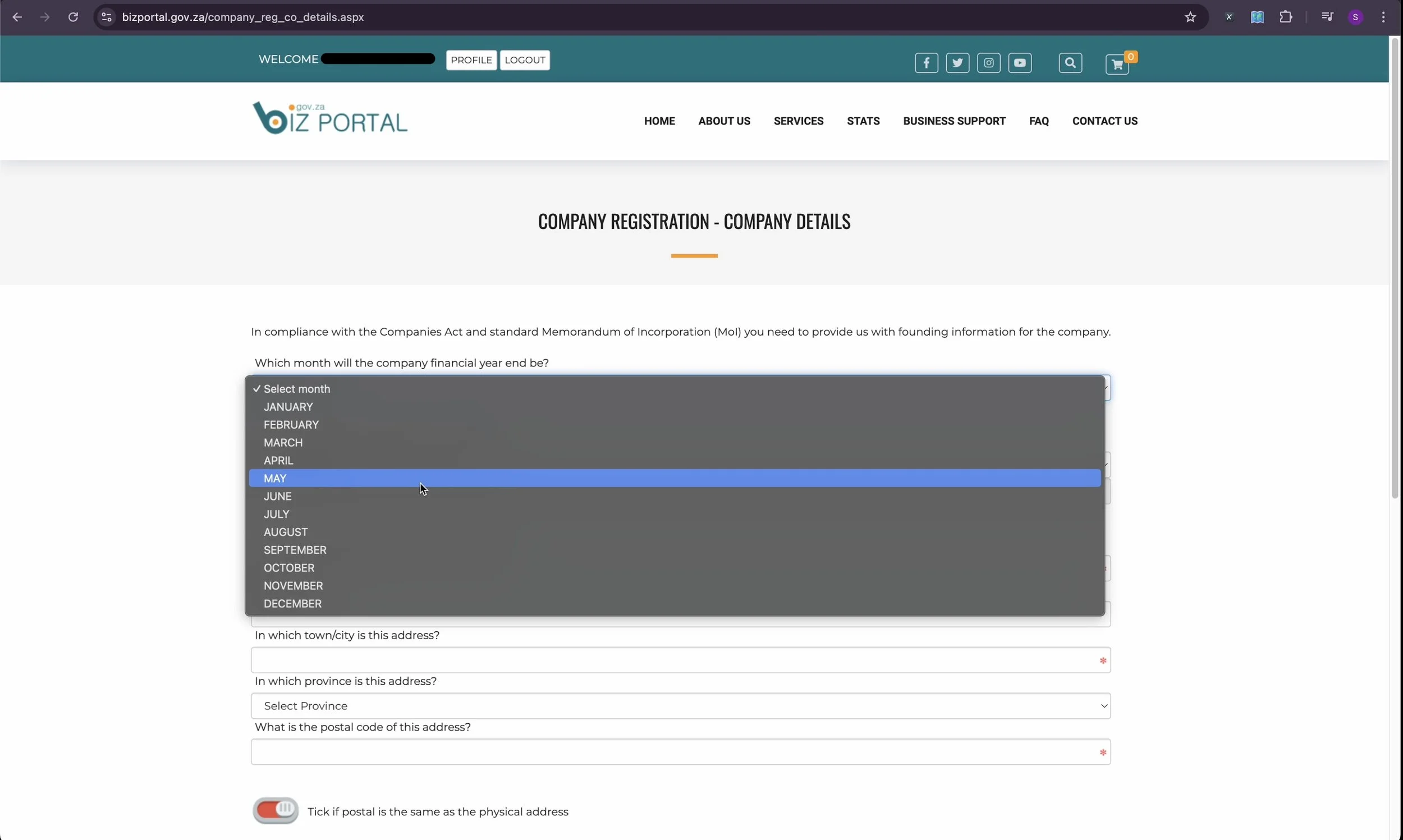
STEP 11 : Select the financial year end of the company
STEP 12 : Add the number of shares
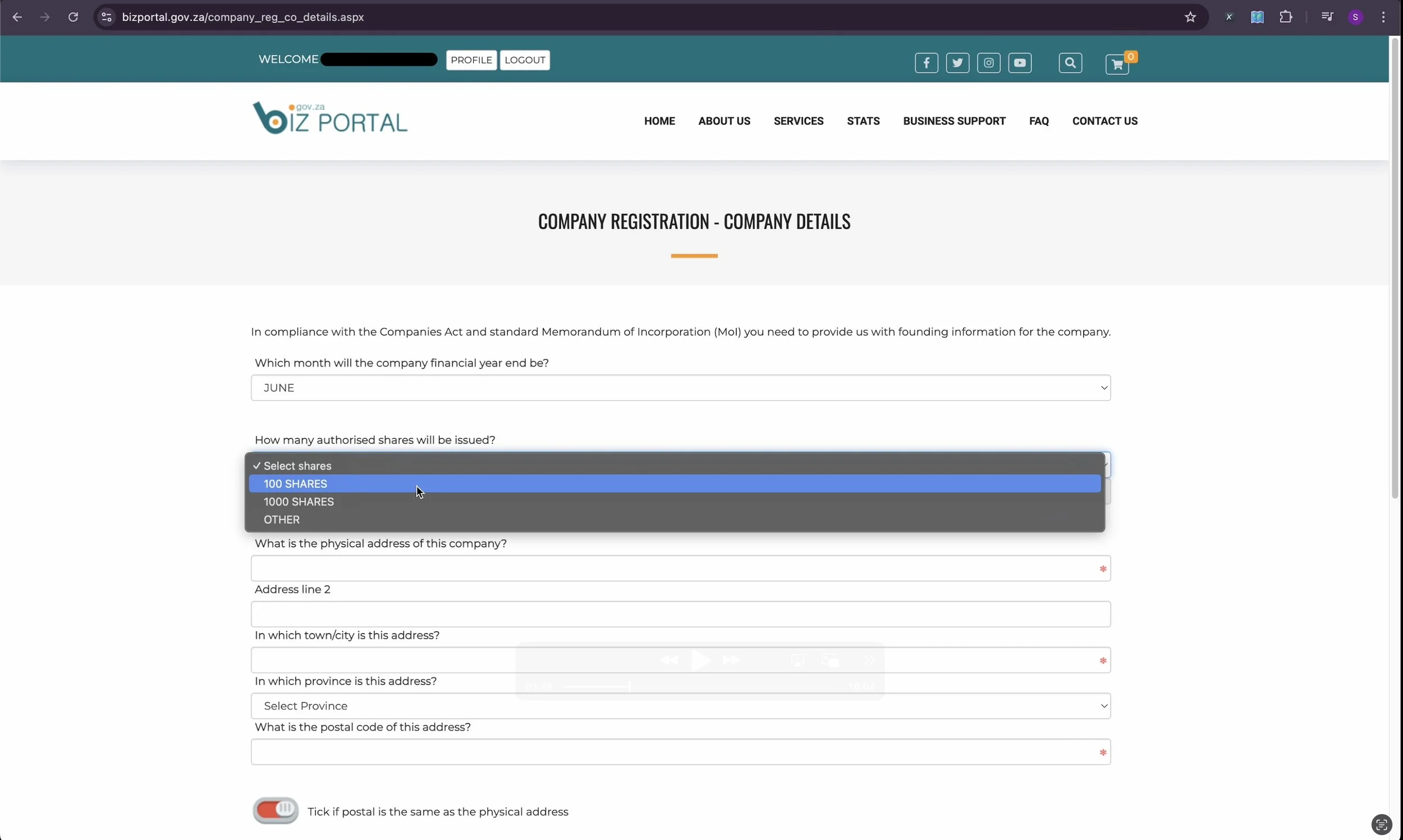
STEP 13 : Add the location of the company and hit continue
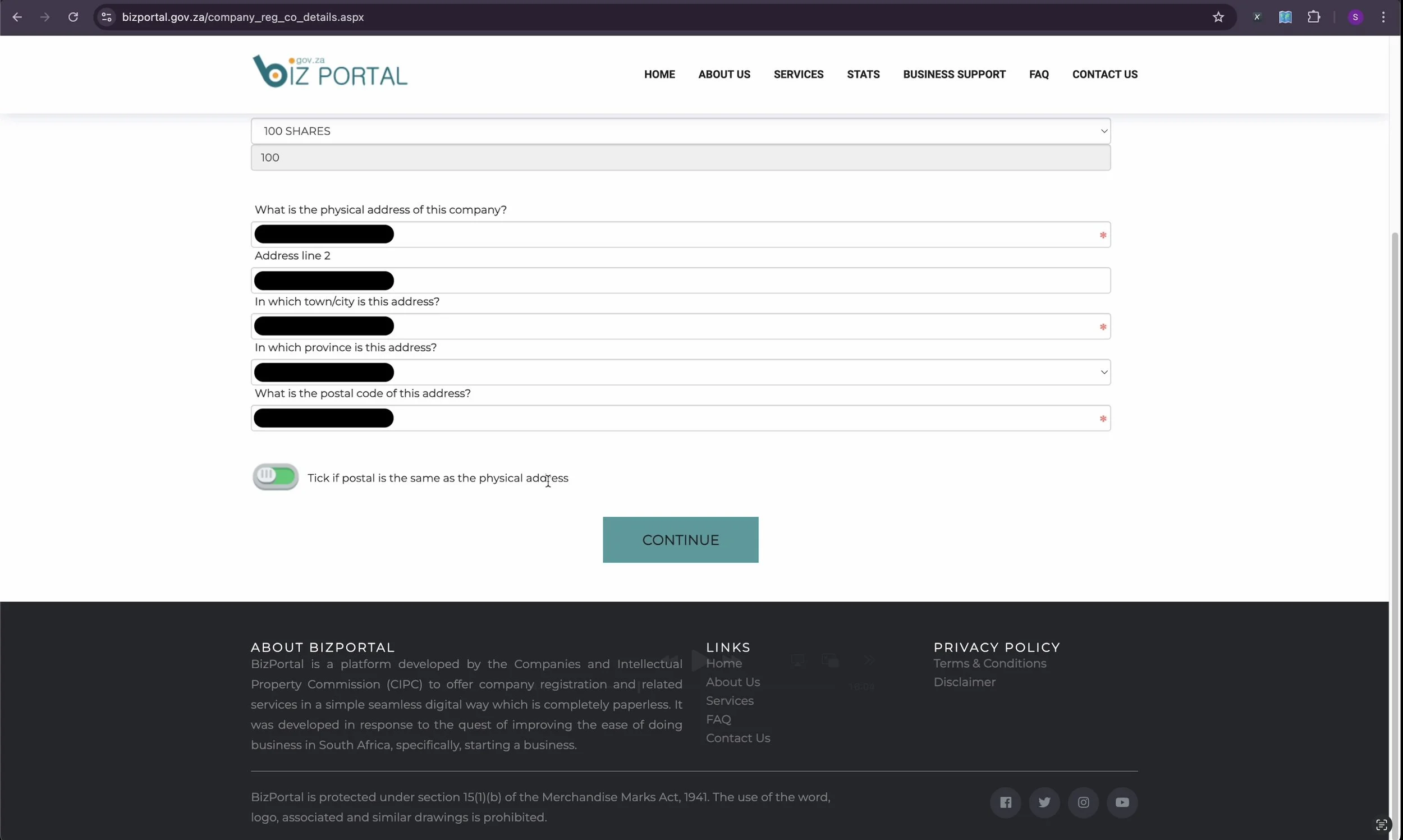
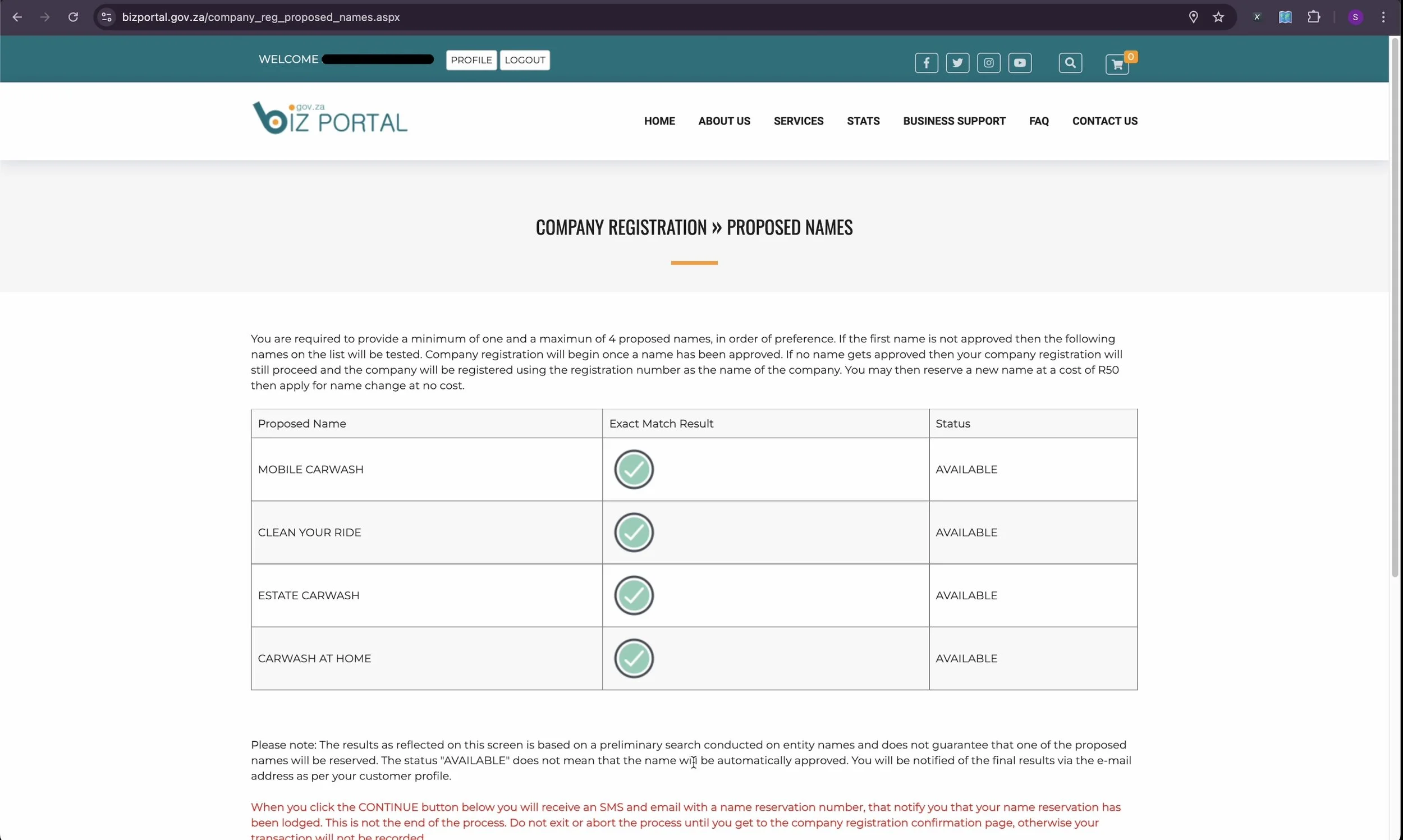
STEP 14 : Apply for a company name or use one that is already approved, or register without a name, its R50 cheaper
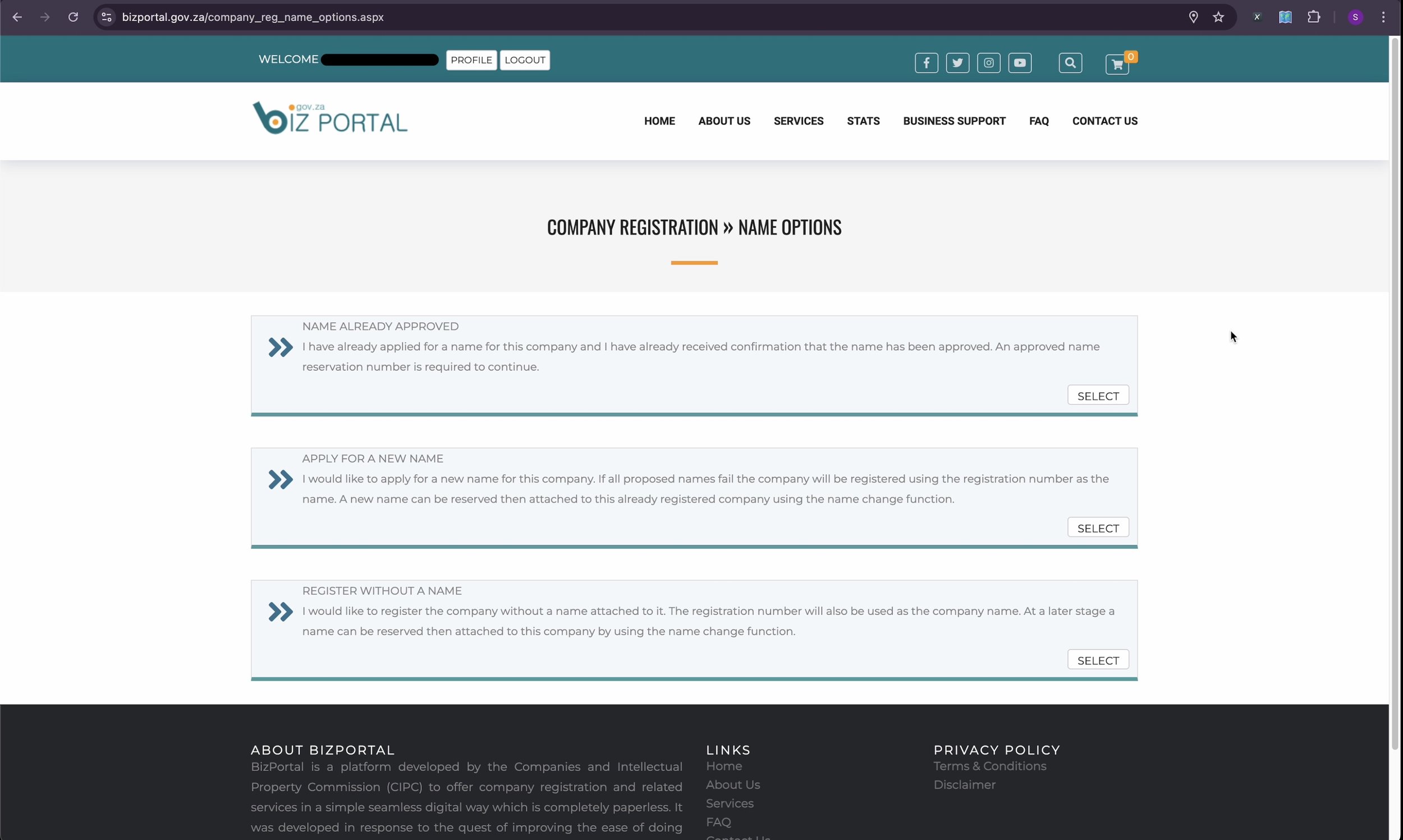
i. Select the option you want as shown in the snip above
ii. If selecting new name application, you will have a new page with 4 slots that you can enter your proposed names and can hit continue.
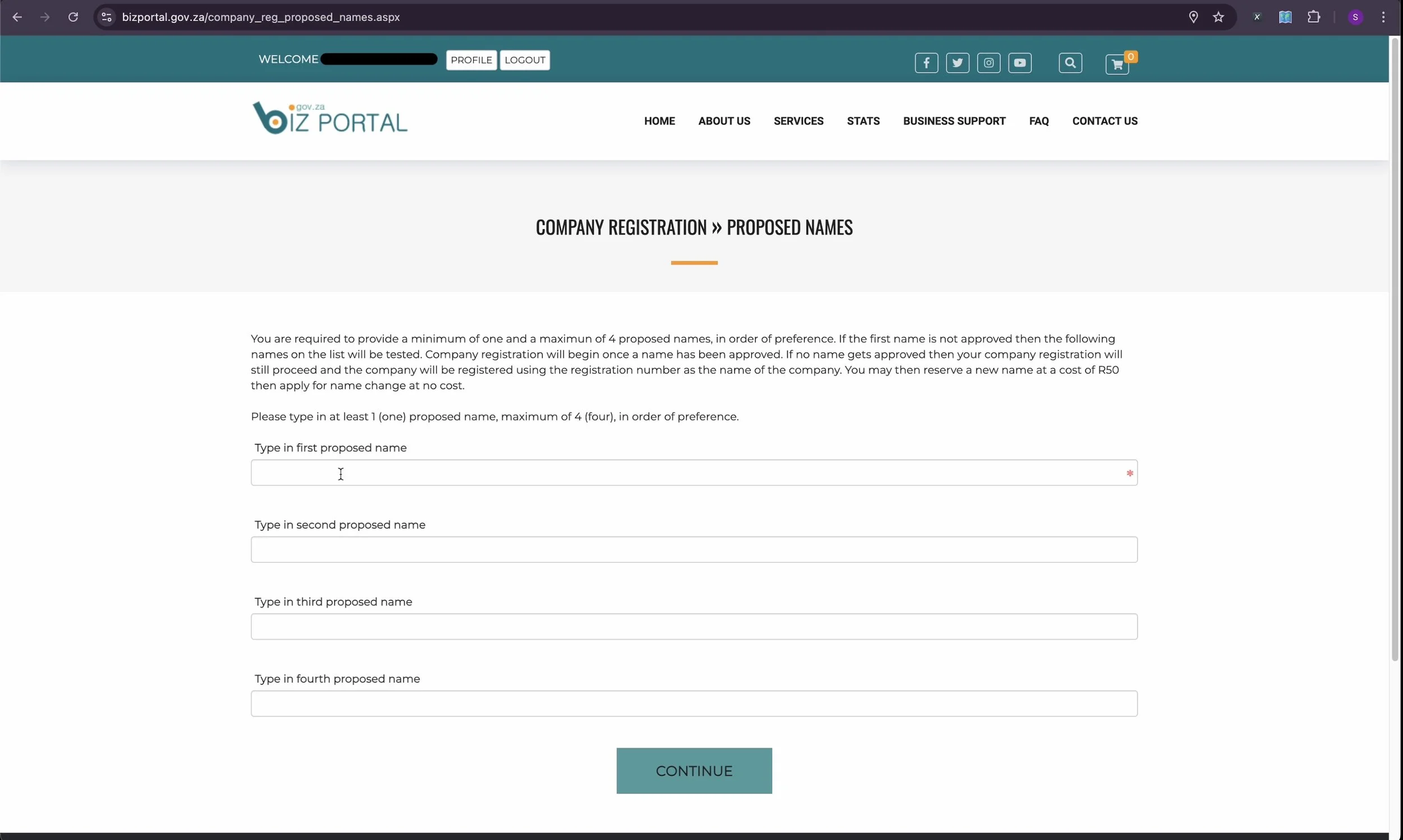
iii. You will hit continue and you will have the option to edit the names and then hit the continue button if you are satisfied
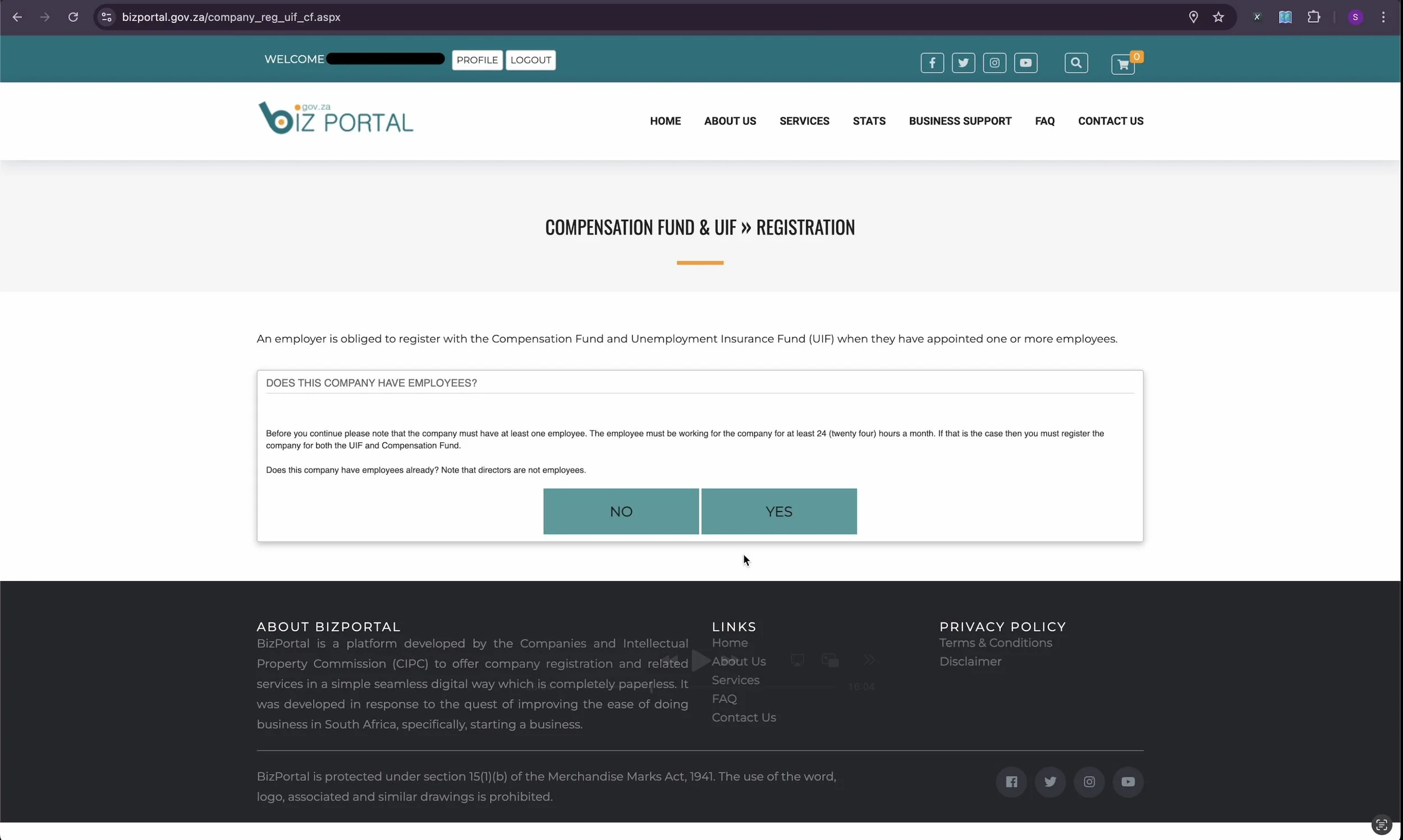
STEP 15: Indicate if your company has employees (note the definition of an employee).
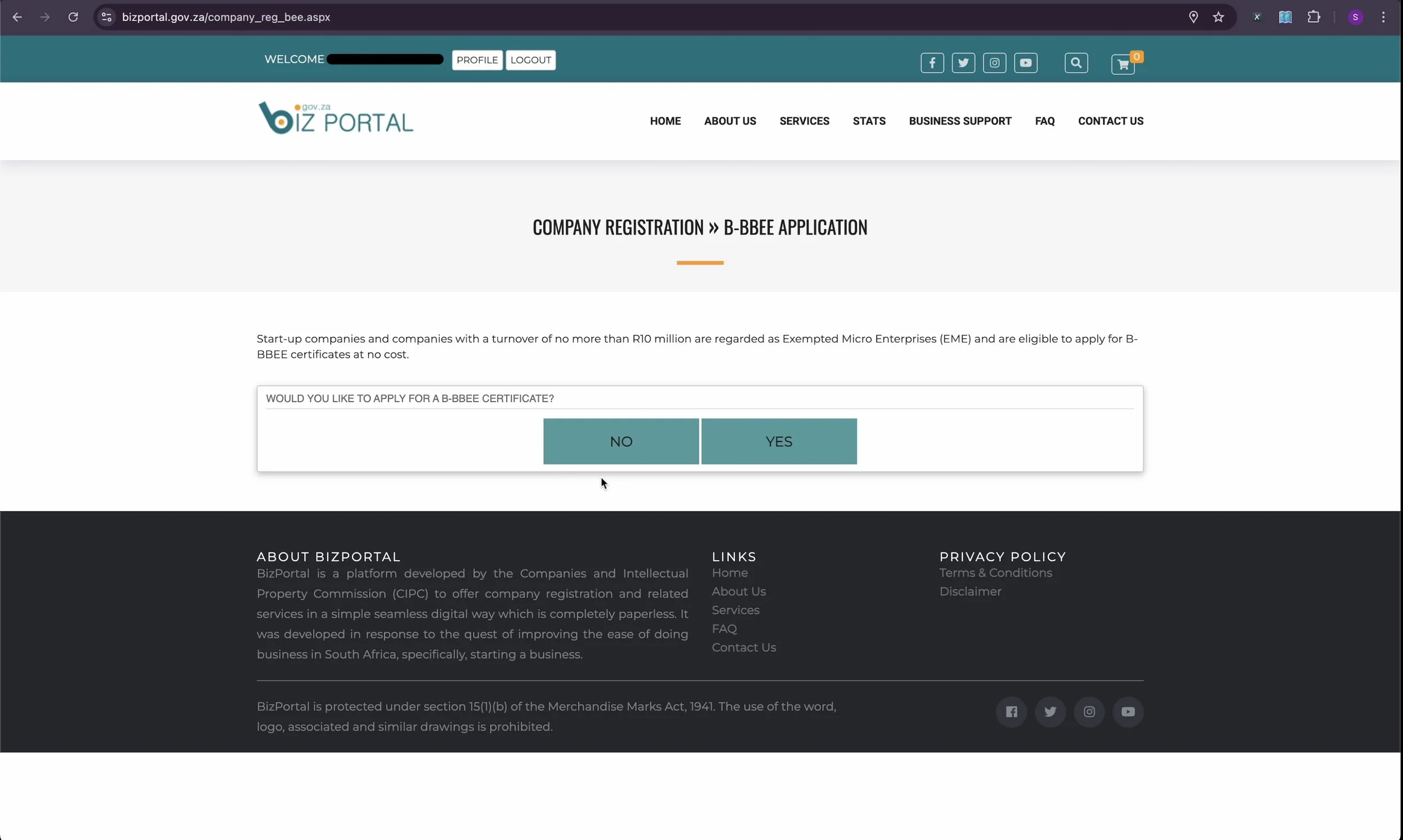
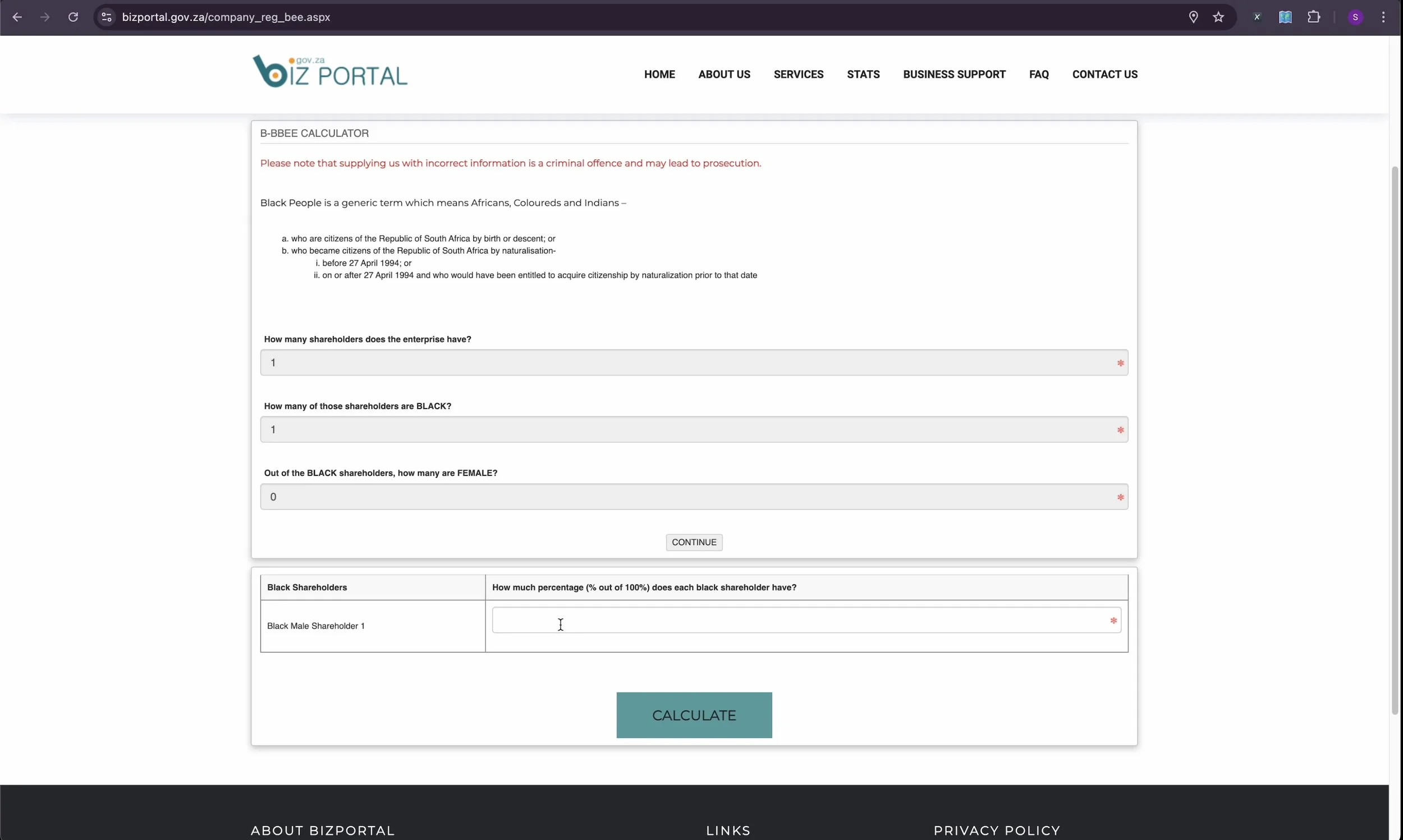
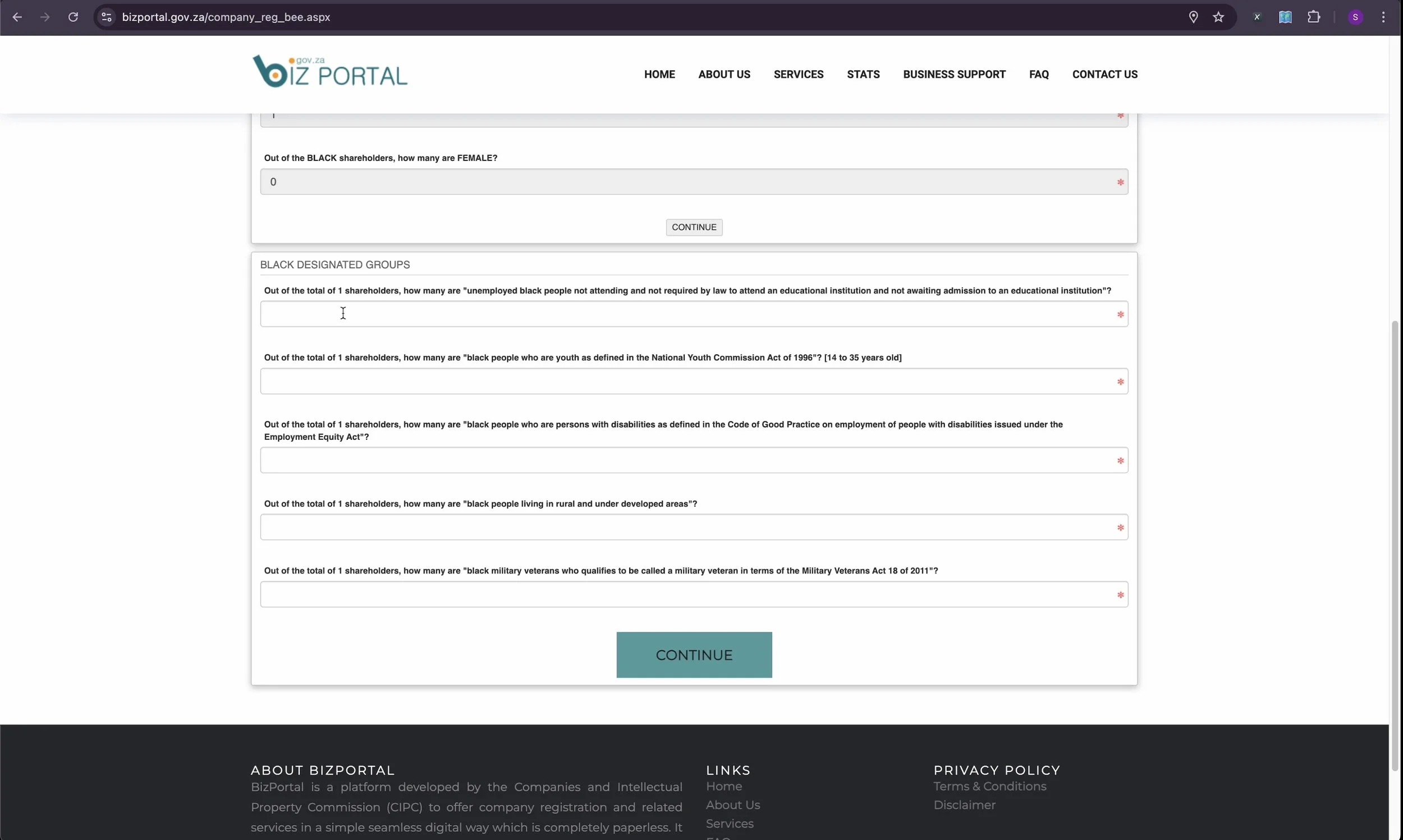
STEP 16 : Indicate if you want to apply for a BEE certificate and follow the questions as shown in the snips below.
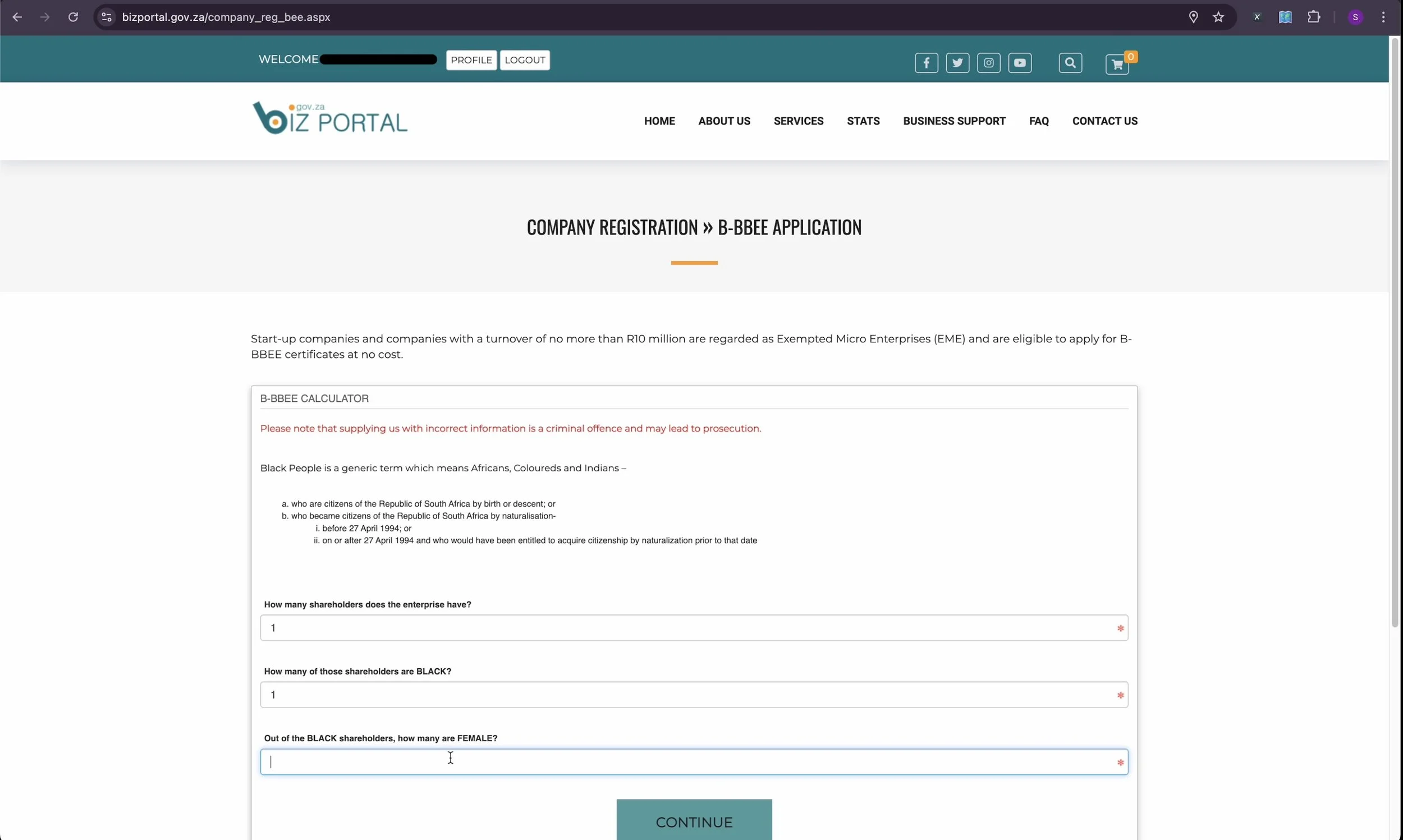
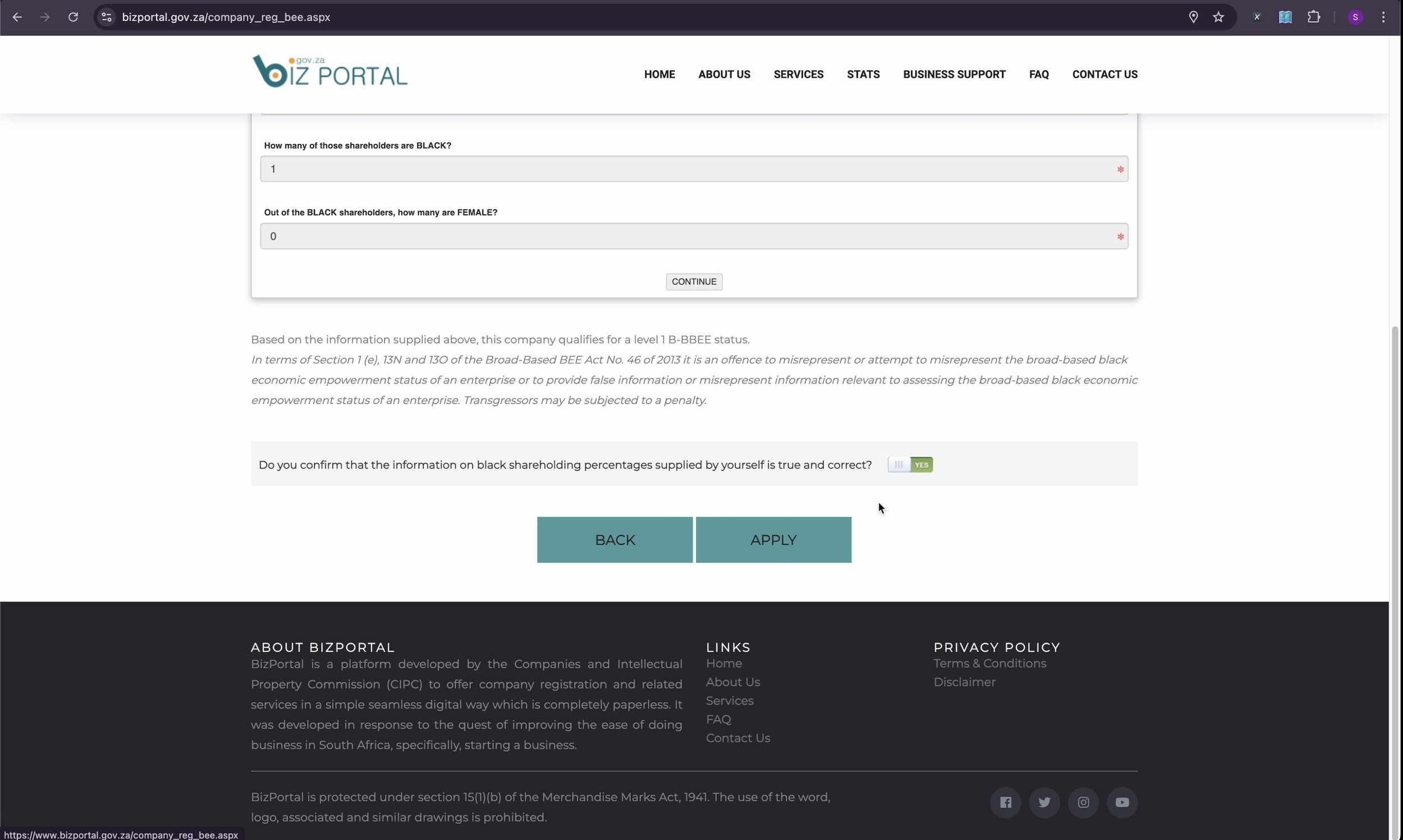
STEP 17 : Hit apply to complete the BEE application
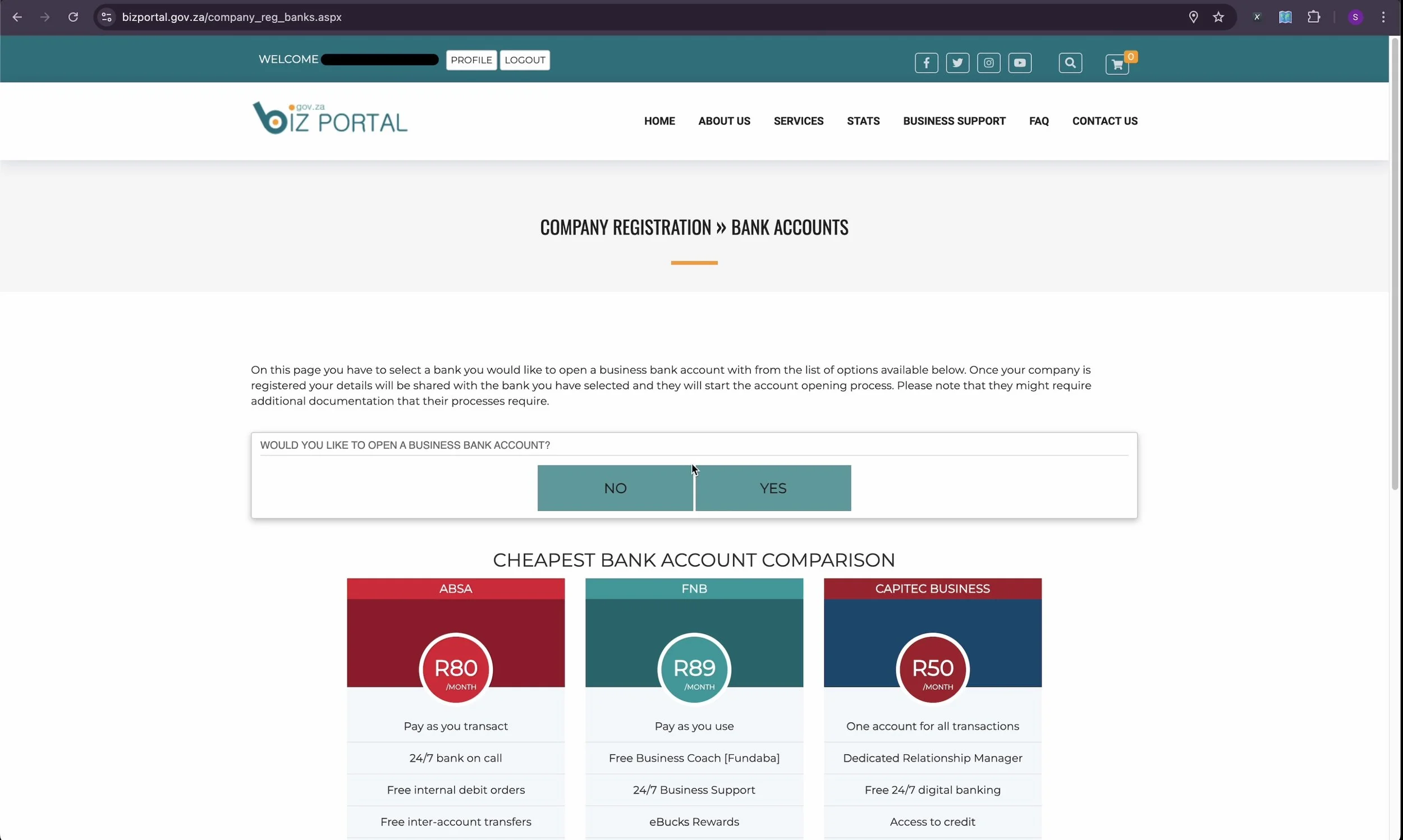
STEP 18 : Apply for a Bank Account – You will be greeted with the option to apply to open a business bank account. This will basically just give the banks your information and they will call you for an offer of a bank account
STEP 19 : Pay for company registration – You will then be greeted with the ability to pay for your new company registration. You will have an option to pay with a card or with your customer balance.
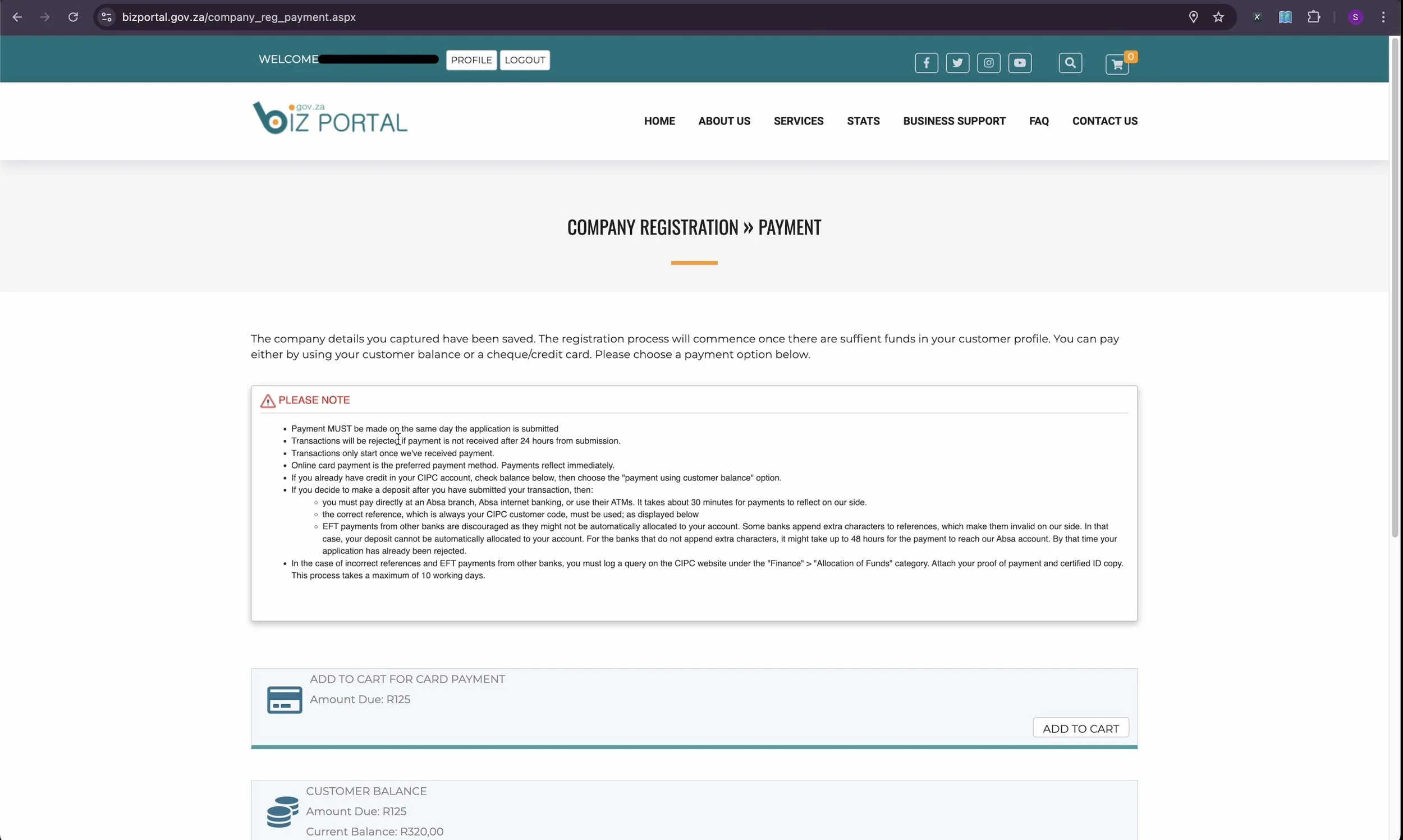
If you hit the card option your application will be lodged while it awaits your payment – therefore click Pay Now button and you will be redirected to the payment portal. Proceed to make payment.
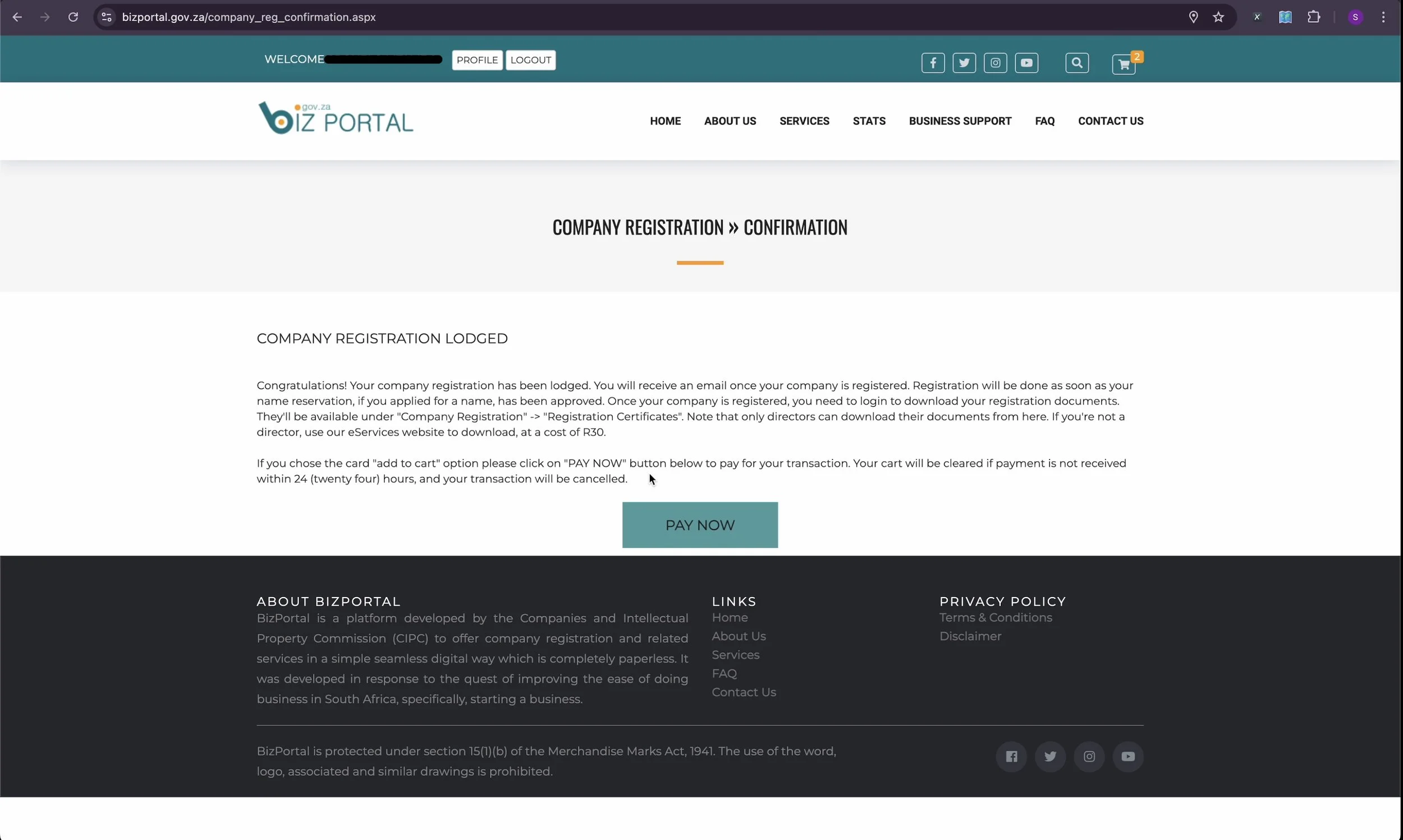
And there you have it! Your company is registered.
If you find yourself wondering or preferring to have this done by a professional, feel free to click on our WhatsApp link below or contact us below and we will be happy to help!


